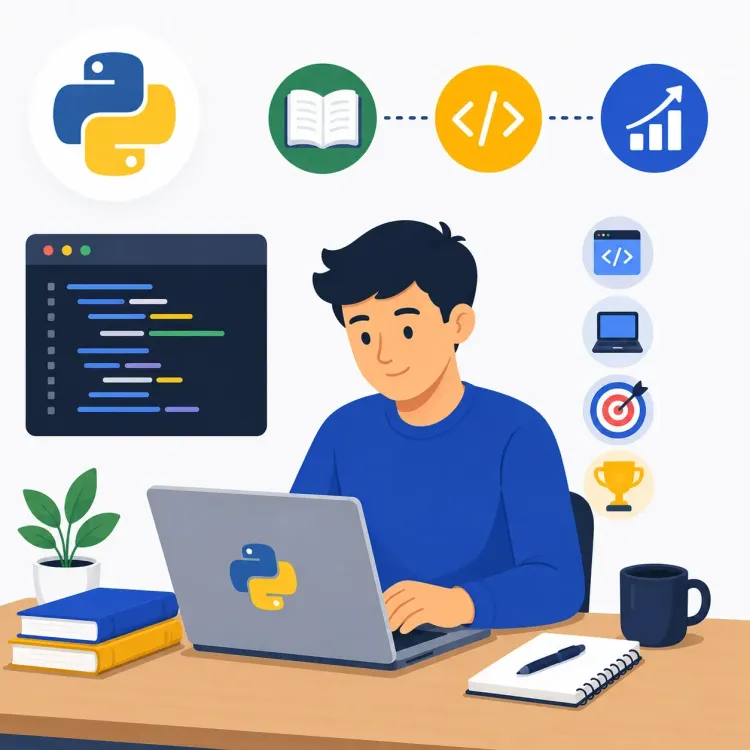
Learn Python programming from scratch and explore career opportunities in development, AI, and data science.
Introduction
Python has become one of the most popular programming languages in 2026 due to its simplicity, versatility, and wide range of applications. From web development and automation to data science and artificial intelligence, Python is used across industries. For beginners and experienced programmers alike, learning Python offers strong career opportunities and a solid foundation in software development. This guide outlines a structured path to mastering Python from beginner to advanced levels.
Why Learn Python in 2026
Python is known for its clean and readable syntax, making it an ideal language for beginners. At the same time, it is powerful enough to handle complex applications, which makes it valuable for advanced developers. Its large ecosystem of libraries and frameworks supports various domains such as machine learning, data analysis, web development, and scripting.
The demand for Python developers continues to grow as companies adopt data-driven technologies and automation. Learning Python not only improves programming skills but also opens doors to multiple career paths.
Beginner Level: Building the Foundation
At the beginner stage, the focus should be on understanding the core concepts of programming using Python. This includes variables, data types, operators, conditional statements, loops, and basic functions. Learning how to write simple programs and solve basic problems helps build confidence and logical thinking.
It is also important to understand how to work with input and output, lists, dictionaries, and basic string operations. Practicing small exercises regularly strengthens your understanding and prepares you for more advanced topics.
Intermediate Level: Expanding Your Skills
Once the basics are clear, the next step is to move into intermediate concepts. This includes working with functions in more depth, file handling, error handling, and object-oriented programming (OOP). Understanding classes, objects, inheritance, and encapsulation is essential for writing scalable and maintainable code.
At this stage, you can start building small projects such as command-line applications, simple web scrapers, or automation scripts. These projects help you apply your knowledge in practical scenarios and improve your problem-solving abilities.
Advanced Level: Specialization and Real-World Applications
At the advanced level, Python can be used in specialized domains depending on your interests. For web development, frameworks like Django and Flask are widely used. For data science and machine learning, libraries such as NumPy, Pandas, and TensorFlow are essential.
Advanced learners should focus on building real-world projects, optimizing code, and understanding performance considerations. Working with APIs, databases, and deploying applications are also important skills at this stage.
Building Projects and Portfolio
A strong portfolio is essential for showcasing your Python skills. Building real-world projects such as web applications, data analysis dashboards, or automation tools demonstrates your ability to apply concepts effectively. These projects can be shared on GitHub and included in your portfolio to attract potential employers.
Documenting your projects with clear explanations, features, and technologies used helps others understand your work and adds professionalism to your portfolio.
Career Opportunities with Python
Python offers a wide range of career opportunities, including roles such as software developer, data analyst, machine learning engineer, and backend developer. Its versatility allows professionals to switch between domains and explore different areas of interest.
With the increasing adoption of AI and data-driven technologies, Python remains a key skill for future-ready careers.
Conclusion
Learning Python from beginner to advanced level is a valuable investment in your career. By building a strong foundation, practicing consistently, and working on real-world projects, you can master Python and unlock diverse opportunities in the tech industry. In 2026, Python continues to be a powerful and relevant programming language for both beginners and experienced developers.